One working surface for the site, the law and the evidence.
Plynth brings site resolution, planning policy, GIS analysis and cited answers into one place—so the planning picture can be checked before it becomes a report.
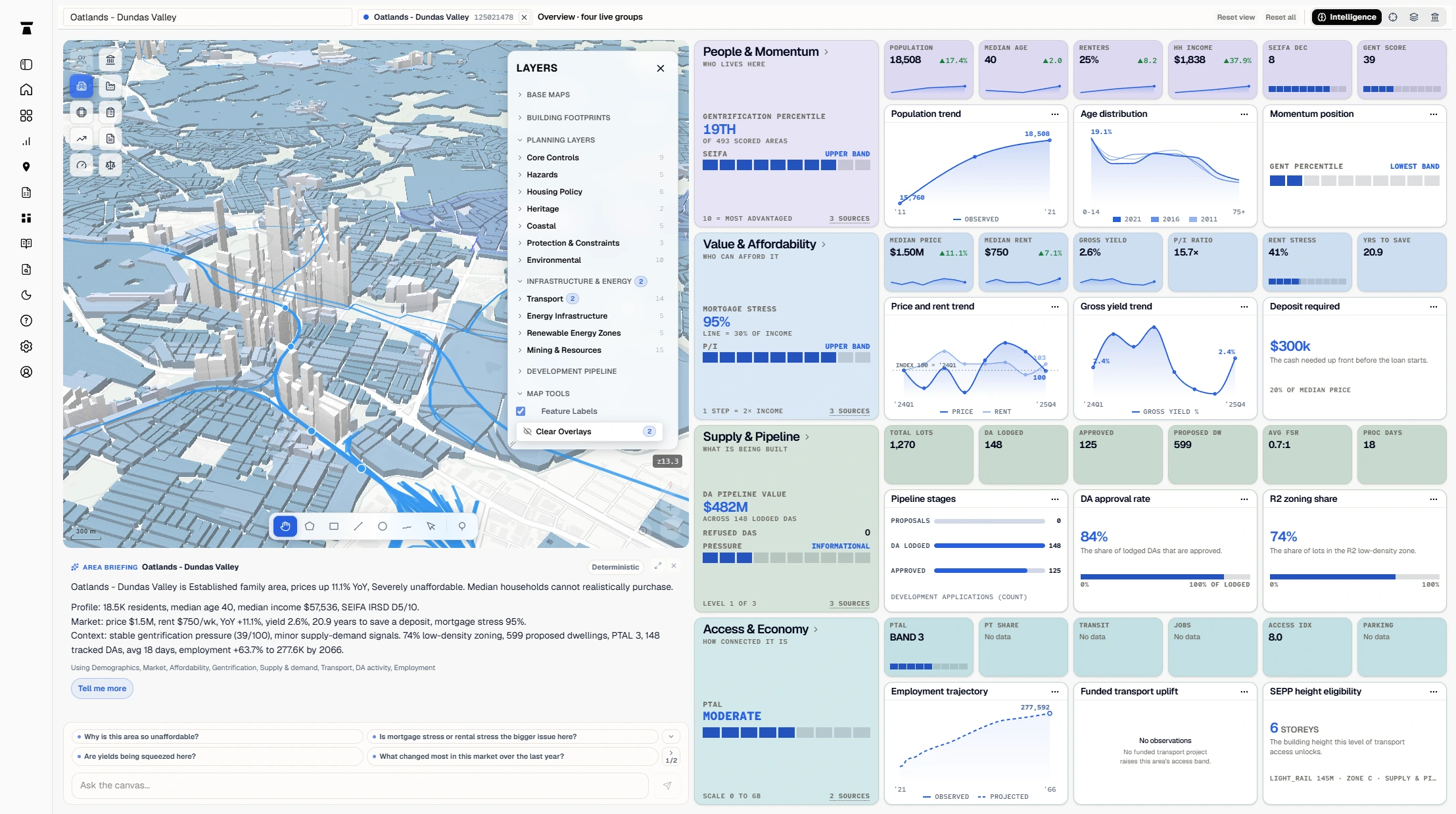
Start with the land, not a generic search result.
Enter an address or select a lot and Plynth resolves the parcel before it reasons about the rules. The working map brings zoning, height, floor-space ratio, heritage, flood, bushfire, environmental constraints and infrastructure context onto the same site record.
This spatial step matters because planning controls attach to land. It narrows the legal and policy search to the instruments, maps and overlays that apply to the selected site.
Ask in plain English, inspect the clause behind the answer.
Plynth searches NSW planning instruments, the National Construction Code and planning judgments, then returns an answer with claim-level citations. A citation opens to its source instrument, provision and supporting words rather than ending at an unsourced summary.
The answer is designed to be checked. Effective date, source identity and the cited extract remain visible so a practitioner can test the reasoning against the underlying material.
Keep measurable controls separate from professional judgement.
Quantitative controls can be evaluated deterministically when the required inputs are available. Plynth reports those checks as pass, fail or undetermined. Discretionary questions are surfaced as matters requiring assessment instead of being quietly decided by a language model.
That boundary makes the result easier to audit and preserves the role of the architect, planner or consultant who remains accountable for the advice.
Carry the map, controls and citations into the next document.
Selected-area reports are editable, cited and exportable, with an automatically captured map figure. They provide the evidence backbone for project diligence and submission work without pretending that a generated report replaces project-specific professional review.
Automated scaffolding for Statements of Environmental Effects, clause 4.6 requests and Heritage Impact Statements remains on the product roadmap.